Critical Elements for Professional Outdoor Smart Signage Implementation
Wiki Article
Open-Air smart visual screens has increasingly become a widely used messaging tool for use by companies, local governments, plus associations seeking high public visibility combined with real-time content. As opposed to inside screens, outdoor networked screens need to operate consistently through dynamic climatic elements while ensuring readable visual output. Each high-quality installation relies on careful technical planning, infrastructure accuracy, and a solid evaluation related to location-based site-specific requirements. Aspects like placement assessment, environmental conditions, along with technical readiness all influence operational results. Considering these critical considerations early serves to limit repair concerns and delivers sustained system consistency.
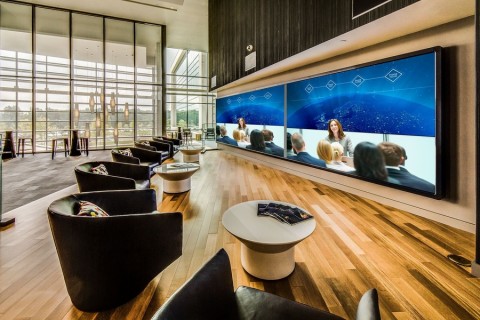
One of the most important considerations of external digital visual signage implementation is location planning and line-of-sight. Strategic location for the screen should align to pedestrian traffic, vehicle driver visibility, plus expected viewing distance range. Screen dimensions, pixel density, and light output specifications are required to correspond to the surrounding location in order to maintain content remains legible under full daylight and also low-light conditions. Reflection control, viewing angles, and near architecture additionally shape customer response. Proper location analysis enables clear message presentation and supporting compliance with applicable city land-use as well as outdoor signage standards.
Climatic defense represents an additional essential factor related to exterior networked visual system setups. Signage units need to be properly contained inside sealed cases built to withstand moisture, debris, moisture levels, and temperature fluctuations. Appropriate ingress protection ratings, airflow systems, plus heat management components serve to limit excess heat and also internal component wear. Mounting strength is also similarly critical, given that installation fixtures must withstand wind loads plus vibration throughout time. All of these safeguarding strategies improve hardware operational life while also lower overall operational outages.
Electrical plus network infrastructure play an part in ensuring stable smart display performance. External installations demand compliant energy routing, grounding systems systems, plus surge suppression to help shield from unexpected voltage instability. Data network reliability, whether through cabled More Info or through connections, should maintain continuous media delivery for content updates along with network tracking. Cable routing and conduit placement design is required visit this page to follow industry best practices in order to protect from common mechanical wear as well as weather conditions. Robust infrastructure development ensures uninterrupted information output and also efficient system administration.
Message planning plus support programs finalize a outdoor networked visual signage deployment. Messages should be carefully structured to allow fast comprehension, by applying appropriate typeface dimensions, contrast, and movement management designed to audience. Scheduled inspection plans, including platform revisions, component checks, along with surface cleaning, help maintain image readability while system uptime. Display tracking solutions can recognize faults at early stages plus allow for proactive maintenance. When both technical execution plus message oversight work together, open-air smart display serves as a durable plus effective visual communication solution.